It seems logical: hot tubs have flat bottoms, so they should go on flat surfaces like concrete pads or wooden decks. But this conventional wisdom ignores a major enemy of outdoor structures: trapped moisture.
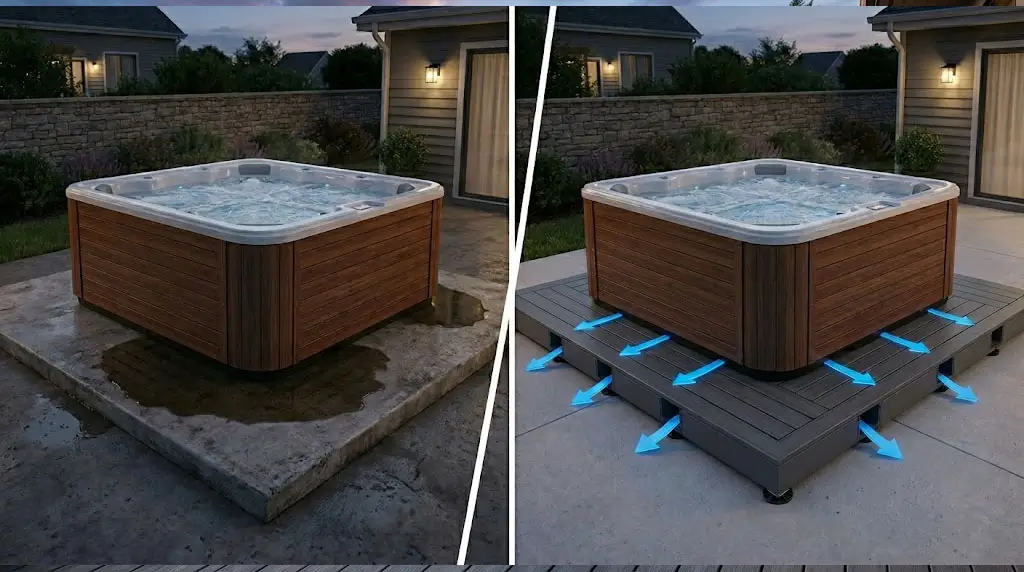
Whether it’s from splashing, rain, or condensation, water inevitably finds its way under your spa. When a hot tub sits directly on a traditional flat surface, that water has nowhere to go. It becomes trapped, creating a dark, damp environment that is the perfect breeding ground for destructive elements.
The Silent Destroyers
- Wood Rot: Many hot tubs still utilize wooden internal frames or bases. Continuous exposure to standing water will cause this wood to soften, rot, and eventually collapse under the immense weight of the water.
- Mold and Mildew: Trapped moisture leads to aggressive mold growth, which not only smells terrible but can compromise the air quality around your spa and eat away at the insulation.
- Pest Infestations: Insects and rodents are naturally drawn to stagnant, damp, and warm environments to build their nests.
Built-In Drainage: The Spa Level-R Advantage
The Spa Level-R was engineered specifically to combat moisture buildup. Unlike concrete or flat decking, our structural composite base features integrated drainage channels.
These channels ensure that water flows away from the underside of your hot tub, keeping the base dry, well-ventilated, and structurally sound. By elevating your spa and managing moisture, you aren’t just leveling your hot tub—you are actively extending its lifespan.